

Understanding the Levels of Electronic Access Control Systems
By Brian Lundgren | June 9, 2026
A Practical Guide for Facility Managers, Maintenance, and Operations Teams
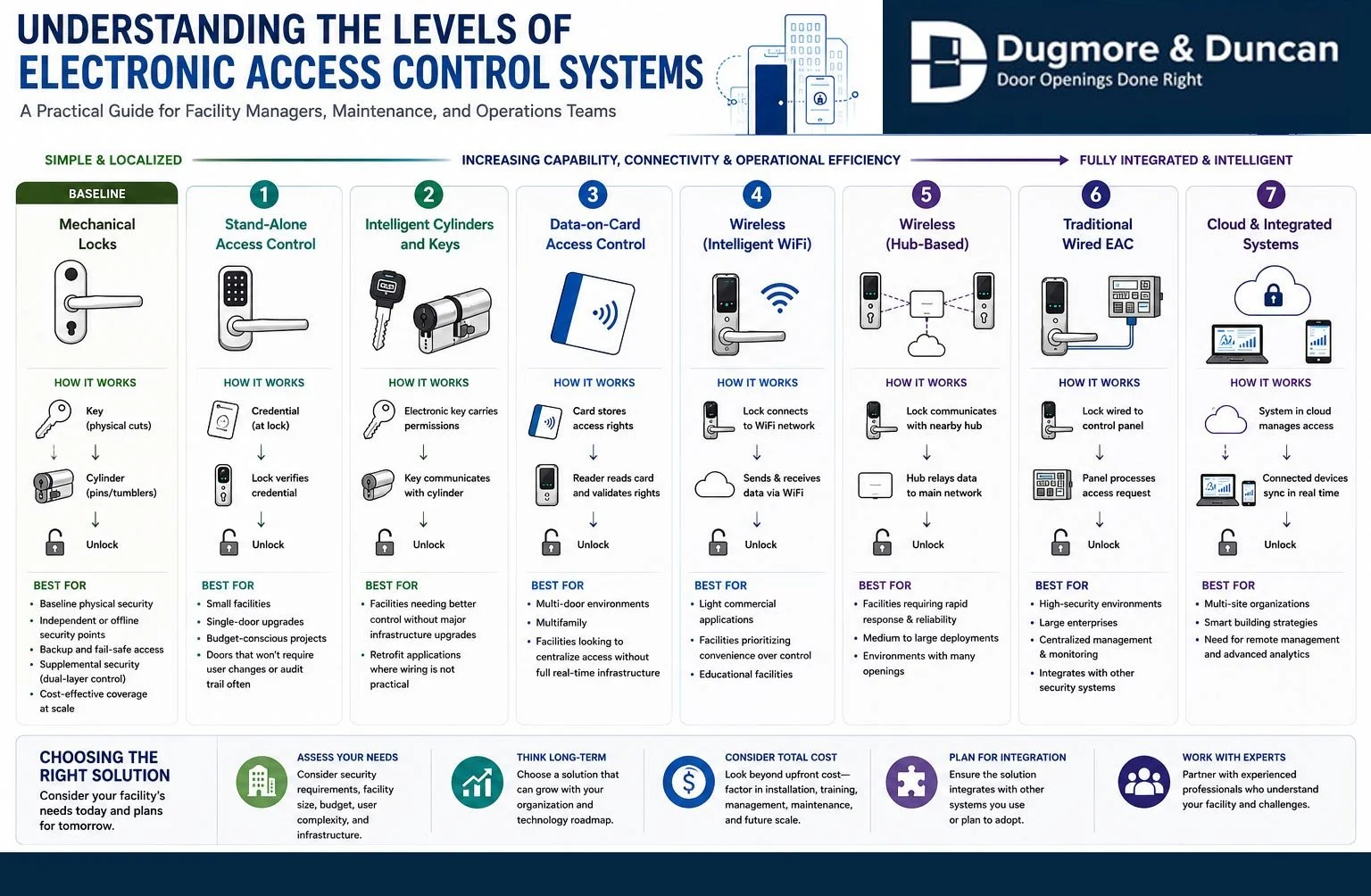
Security in commercial facilities has evolved far beyond keys and locks. Today, access control is not just about securing doors—it’s about managing risk, improving operations, increasing accountability, and enabling smarter buildings.
At Dugmore & Duncan, we work with organizations across education, healthcare, government, and commercial environments to design and implement door opening solutions that align with real-world operational needs.
Because access control technologies vary significantly by manufacturer, system architecture, infrastructure requirements, and operational goals, there is no universal “one-size-fits-all” approach to electronic security. Most facilities ultimately operate within a layered environment that combines mechanical hardware, electronic credentials, wireless technologies, centralized management, and integrated building systems.
This guide organizes common access control solutions into practical categories based on cost, scalability, connectivity, infrastructure requirements, operational visibility, responsiveness, and long-term flexibility. These categories are not intended to be rigid industry “levels,” but rather a practical framework to help facility managers, maintenance teams, IT personnel, security professionals, and operations leaders evaluate which solutions best fit their operational needs, budget, and environment.
Product and manufacturer references throughout this guide are intended as representative examples of technologies commonly associated with each category. Actual capabilities can vary significantly depending on product configuration, software platform, integration strategy, infrastructure design, and facility requirements.
From basic mechanical locking systems to fully integrated intelligent ecosystems, understanding the operational strengths and limitations of each approach can help organizations make more informed decisions about both security and day-to-day facility management.
Baseline: Mechanical Locks
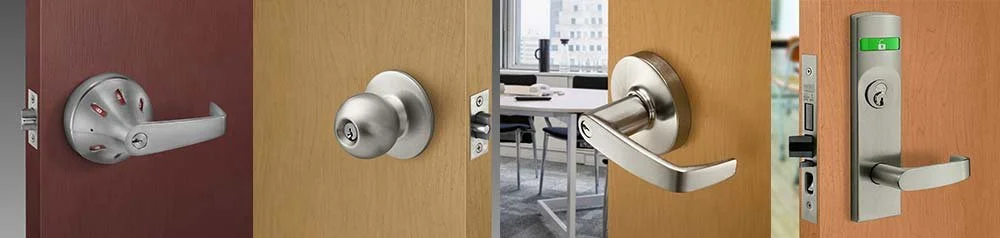
Mechanical locks remain the foundation of most facilities. They are simple, reliable, and cost-effective. Electric access control expands capability (management, monitoring, flexibility), but mechanical key cylinders remain a dependable, essential component in many security strategies.
How it works:
A physical key interacts with a cylinder (pins/tumblers) to unlock the door.
Where they fit:
Baseline physical security (the foundation layer)
Independent or offline security points
Backup and fail-safe access
Supplemental security (dual-layer control)
Cost-effective coverage at scale
Operational considerations:
Lost or duplicated keys create ongoing risk and cost
No visibility into who accessed a door
Difficult to manage across multiple users or buildings
Dugmore & Duncan perspective:
Mechanical locks still play an important role, but they are rarely sufficient on their own in modern facilities—especially in environments like schools or healthcare where accountability matters.
Level 1: Stand-Alone Access Control
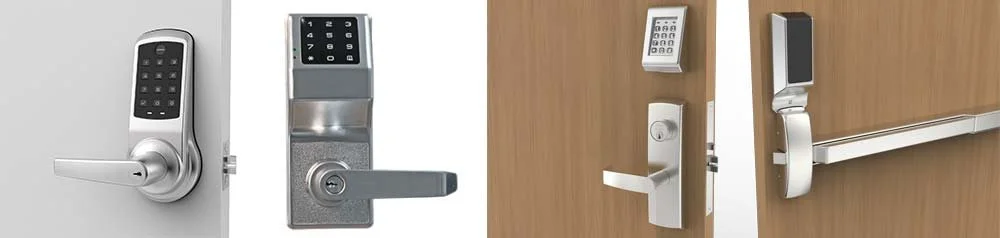
Stand-alone locks introduce electronic credentials without requiring a network.
Examples: ACCENTRA nexTouch, Alarmlock DL2700, SARGENT KP Series
How it works:
A credential is verified directly at the lock.
Where they fit:
Small facilities
Single-door upgrades
Budget-conscious projects
Doors that won’t require user changes or audit trail often
Operational advantages:
Eliminates physical keys (emergency key override available)
Simple to install and manage (no wiring)
Ideal for quick upgrades
Operational considerations:
No centralized control
Limited audit trail capabilities
Limited scalability
Audit trail and programming is done at the door using keypad or a data transfer device
Required periodic battery replacement
Dugmore & Duncan perspective:
A good stepping stone—but most organizations outgrow stand-alone systems quickly as complexity increases.
Level 2: Intelligent Cylinders and Keys

These systems combine traditional lock hardware with embedded electronics.
Examples: Medeco XT, ASSA ABLOY CLIQ
How it works:
Electronic keys carry permissions and communicate with the cylinder/lock.
Where they fit:
Facilities needing better control without major infrastructure upgrades
Retrofit applications where wiring is not practical
Operational advantages:
No wiring required (huge deployment advantage)
Electronic control over mechanical keys
Strong key control and resistance to duplication
Lower total cost than full access control (in many cases)
Operational considerations:
Requires key management
Battery dependence
Access rights are not always updated in real time at every door
Dugmore & Duncan perspective:
One of the most practical retrofit solutions available. Ideal for organizations that want improved control without the cost of a full system overhaul.
Level 3: Data-on-Card Access Control
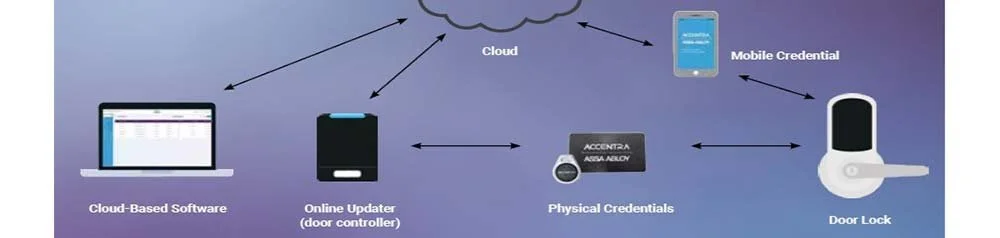
In this model, access permissions are stored directly on the credential.
Examples: ACCENTRA
How it works:
The card credential carries access rights, which are validated at the door.
Where they fit:
Multi-door environments
Multifamily
Facilities looking to centralize access without full real-time infrastructure
Operational advantages:
Single credential for multiple doors
Reduced reliance on continuous network connectivity
Lower infrastructure costs
Mobile credentials updated in real time
Operational considerations:
Physical credentials require interaction with online updater
Updates require interaction with the credential
Not truly real-time
Require periodic battery replacement
Dugmore & Duncan perspective:
A strong mid-tier solution that balances cost, control, and scalability—especially when integrated into broader systems.
Level 4: Wireless (Intelligent WiFi)
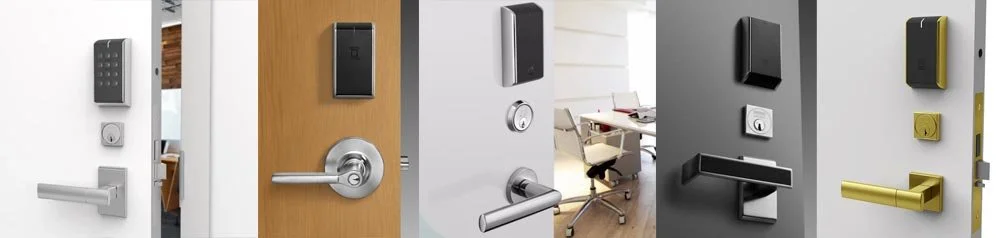
These systems use existing WiFi infrastructure for connectivity.
Examples: SARGENT & Corbin Russwin IN120 WiFi
How it works:
Each lock connects directly to the building’s WiFi network, making every door a standalone networked device.
Where they fit:
Light commercial applications
Facilities prioritizing retrofit simplicity and reduced infrastructure cost
Higher- Educational facilities
Operational advantages:
Faster deployment compared to traditional wired systems
Simplifies retrofits in occupied buildings and difficult-to-wire openings
Easier expansion for growing facilities
Operational considerations:
Limited command-and-control capabilities
Performance and responsiveness can vary depending on network architecture, signal quality, battery management, and IT infrastructure design
Uses existing IT infrastructure (Wi-Fi routers and CAT 5/6)
Require periodic battery replacement
Dugmore & Duncan perspective:
Intelligent Wi-Fi systems are generally simpler and faster to implement; however, their reliance on batteries should be carefully considered, particularly for high-traffic openings where battery life may become a significant factor.
Level 5: Wireless (Hub-based)

These systems use a dedicated low-power wireless protocol between locks and a hub/gateway/controller.
Examples:Aperio
How it works:
Hub-based wireless model where locks communicate locally to a nearby gateway in real time, and that gateway then relays information to the main network.
Where they fit:
Facilities requiring rapid response and high visibility
Environments where lockdown capabilities are critical
Higher-educational Facilities
Operational advantages:
Much better battery life
More reliable for access hardware
Better RF penetration through concrete, metal framing, older buildings
Operational considerations:
Requires continuous or near-continuous wireless connectivity
Extra hardware needed; hubs, gateways, repeaters, or wireless controllers
Response time can fluctuate due to signal strength, network congestion, gateway load
Dugmore & Duncan perspective:
Hub-based wireless systems are more scalable than Wi-Fi systems with longer battery life and are common for enterprise-grade access control.
Level 6: Traditional Wired Access Control (EAC)
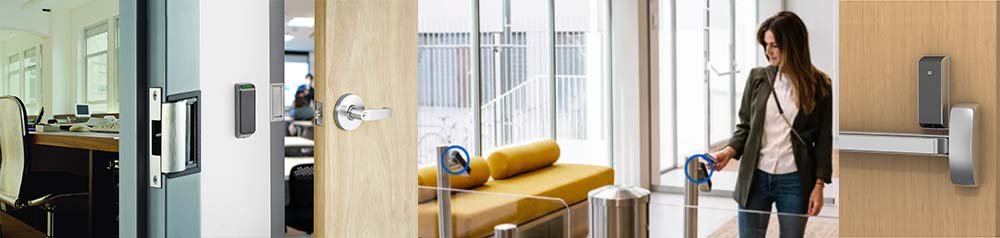
This is the industry-standard enterprise solution.
Examples:HID Global, Corbin Russwin & SARGENT IN220 & SN Series, HES Electric Strikes, Adams Rite Electric Strikes & Exit Devices, Securitron Electromagnetic Locks
How it works:
All door components are wired to a central control panel, with decisions made in real time.
Where they fit:
Hospitals
Universities
Government facilities
High-security environments
Operational advantages:
Centralized control
Real-time decision-making
High reliability
Operational considerations:
Higher installation cost
Less flexible for retrofits
Dugmore & Duncan perspective:
Still the gold standard for high-security applications. When properly designed, it provides unmatched reliability and control.
Level 7: Cloud-Managed Systems and Integrated Solutions
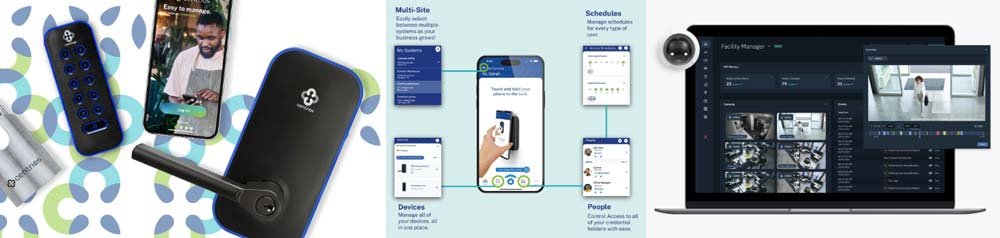
Modern access control is no longer just about doors—it’s about systems working together.
7a: Cloud-Based Access Control - Access as a Service (ACaaS)
These systems are designed around centralized cloud management, mobile credentials, simplified deployment, and subscription-based administration.
Examples: Centrios, Brivo (core offering)
Remote management across multiple sites
Subscription-based (no on-prem servers)
Scalable and flexible
Focus on small and growing businesses
7b: Integrated Intelligent Ecosystem
These systems extend beyond access control into enterprise-wide physical security and building operations.
Examples: Brivo (with ASSA Abloy and Other Manufacturer Hardware)
Connect access control with cameras, alarms, building systems, intelligent key cabinet
Enable automated responses (e.g., forced door triggers multiple systems)
Centralize management across the entire facility
Positioned as a scalable enterprise and multi-site platform with extensive integrations and enterprise features
Dugmore & Duncan perspective:
This is where the industry is heading—the door becomes part of a larger intelligent ecosystem, not a standalone component.
Choosing the Right Solution for Your Facility
There is no one-size-fits-all approach. The right system depends on:
Facility size and complexity
Security requirements
Existing infrastructure
Budget and long-term scalability
Typical paths we see:
Smaller applications (add-on) → Stand-alone or intelligent cylinders
Retrofit projects → Wireless openings
Large or high-security environments → Wired (EAC) systems
Multi-site organizations → Cloud-based access control
Work with a Partner Who Understands the Full Opening
Access control is only one part of the equation. The door, hardware, frame, and integration all need to work together.
At Dugmore & Duncan, we specialize in complete door opening solutions—from hardware and key systems to fully integrated access control.
If you're evaluating your current system or planning an upgrade, our team can help you design a solution that fits your facility—not just in theory, but in day-to-day operation.