

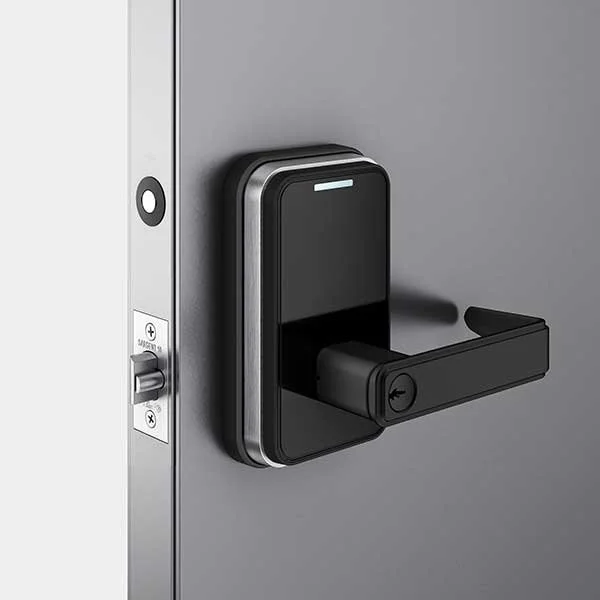
The new SARGENT and Corbin Russwin LNK100 makes real-time access control practical for more doors by eliminating the need to run wiring to every opening. As a Level 5 hub-based wireless solution, it offers a simpler way to bring centrally managed access control to hard-to-wire and retrofit applications.
One of the biggest challenges in electronic access control isn't deciding whether a door should be controlled. It's figuring out how to get access control to the door without the cost and disruption of wiring it.
That is where the new LNK100 from SARGENT and Corbin Russwin is interesting.
The LNK100 is a new Aperio® real-time wireless lock designed to bring centralized, real-time access control to more openings—particularly doors where running wires is difficult, expensive, or simply doesn't make sense.
The Problem with Wiring Every Door
Traditional wired access control provides excellent control and visibility. The problem is that extending it to every opening can become expensive quickly.
Getting power and communication wiring to a door can mean pulling cable, accessing walls and ceilings, coordinating with other trades, and disrupting an occupied facility.
That can make certain doors difficult to justify for full access control.
As a result, many facilities end up with a mixture of highly controlled exterior doors and primary openings, while interior, secondary, or difficult-to-wire doors remain mechanical or use a less capable electronic solution.
The LNK100 is designed to address that gap.
Real-Time Access Control Without Wiring Around the Door
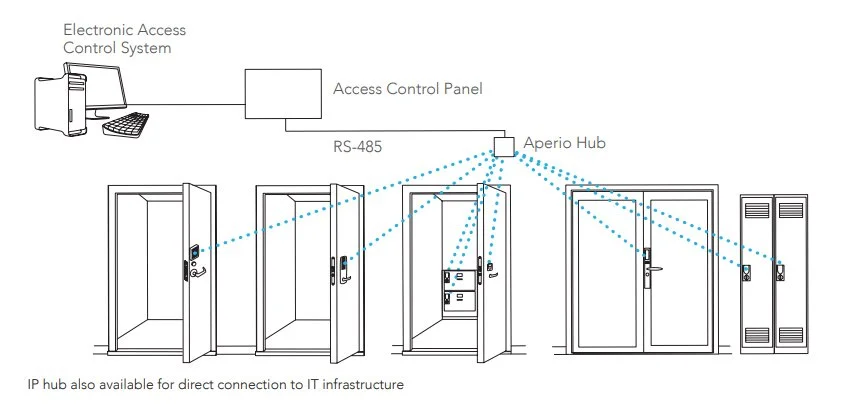
The LNK100 uses Aperio's low-power wireless communication between the lock and an Aperio hub. The hub then connects the wireless opening to the facility's electronic access control system.
In other words, the lock doesn't need a wired connection running to the door.
According to SARGENT, the LNK100 provides real-time alarms and events, real-time access decisions, real-time schedule and door-state changes, and remote lock and unlock in under 10 seconds. It uses four AA batteries, with a stated battery life of approximately one year, and can continue functioning during a network or power disruption.
That combination is what makes the product significant.
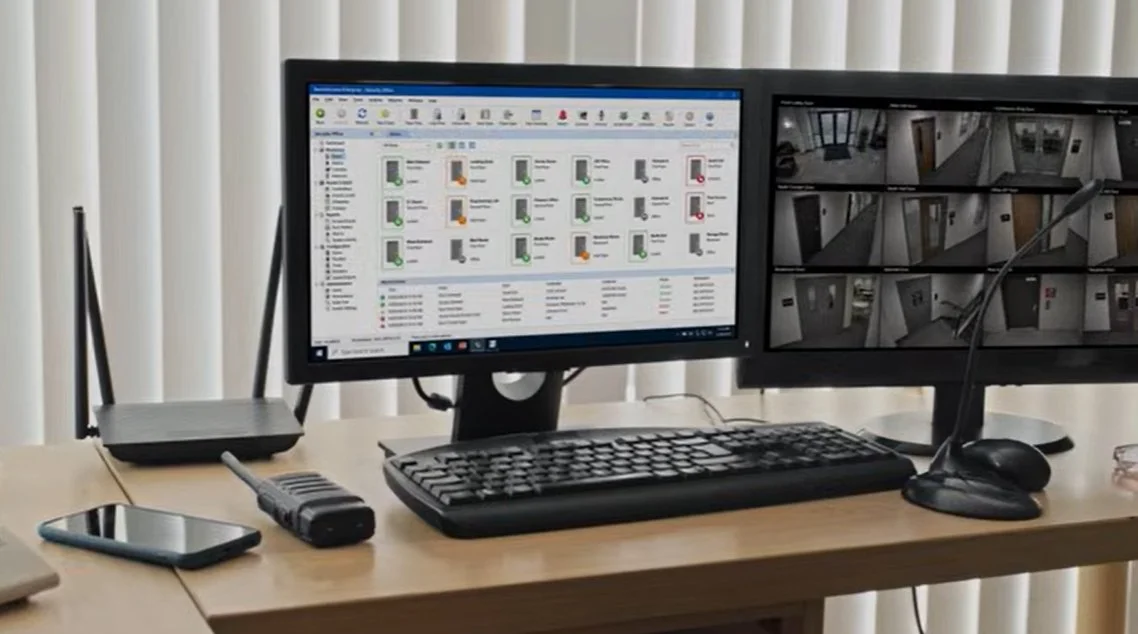
This isn't simply a wireless lock that stores credentials locally. It is intended to operate as part of a connected access control system while eliminating much of the physical infrastructure normally required at the door.
Where the LNK100 Fits in the Access Control Spectrum
In our recent article, Understanding the Levels of Electronic Access Control Systems, we described hub-based wireless access control as Level 5.
Level 5 systems use a dedicated wireless connection between the lock and a nearby hub or gateway. The hub then connects that opening to the larger access control system.
The LNK100 is a good example of this architecture.
Unlike Level 4 intelligent Wi-Fi locks, where each lock communicates directly with the building's Wi-Fi network, a Level 5 Aperio system uses a dedicated low-power wireless connection between the lock and hub. This approach can provide the advantages of wireless installation while maintaining a more scalable architecture for larger access control deployments.
The important distinction is that wireless does not necessarily mean stand-alone.
A Level 5 wireless opening can still be part of a larger, centrally managed access control system.
A Retrofit-Friendly Approach
The LNK100 is designed around existing door hardware configurations.
The product is available in both cylindrical/bored and mortise configurations and uses existing cylindrical/bored lock preparation unless a door position switch is being added. The mortise version is based on SARGENT 8200 Series and Corbin Russwin ML2000 preparation with specified modifications. The lock uses ANSI/BHMA Grade 1 hardware.
That matters in retrofit applications.
The less that needs to be changed at the opening, the easier it becomes to add access control to an existing facility—particularly when the alternative involves running new infrastructure through a finished or occupied building.
SARGENT specifically identifies hard-to-wire locations as an intended application and describes the LNK100 as eliminating the wiring around the door that represents a major cost and inconvenience of traditional wired access control.
More Than One Credential Option
The LNK100 also supports a wide range of existing credential technologies, including HID MultiCLASS®, Seos™, MIFARE® and DESFire® technologies, PIV/PIV-I, HID Mobile Access®, Apple Wallet and Google Wallet credentials, subject to the applicable system and software configuration.
That flexibility is important for facilities that don't want to create a separate credential ecosystem just to add wireless openings.
The goal is to make the new opening part of the existing access control strategy.
Why This Matters
The most interesting part of the LNK100 isn't the wireless technology by itself.
Wireless access control has been around for years.
The bigger story is where wireless access control can now be used.
If the cost and disruption of wiring have prevented a facility from putting real-time access control on certain doors, a hub-based wireless solution provides another option.
That could include interior offices, classrooms, administrative spaces, secondary entrances, service areas, or other openings where the security and accountability benefits of electronic access control are desirable but running wire to the opening is difficult.
Aperio's own product literature describes the platform as a way to expand existing access control systems and secure openings that might otherwise remain unprotected.
That is the real opportunity.
Closing the Gap Between Wired and Unprotected Doors
There will always be applications where traditional wired access control is the right answer. Wired systems remain an important choice for high-security and high-traffic openings where dedicated infrastructure makes sense.
But not every door needs the same solution.
The LNK100 represents another point on the access control spectrum: real-time, centrally managed electronic access control without having to wire every opening.
And that could be its biggest impact.
For facilities with hundreds or thousands of doors, the question isn't necessarily whether every door can be wired.
It's whether every door that needs real-time access control has to be wired.
The LNK100 offers a different answer.
Sometimes, the best way to get access control to the door is to stop running the wire to it.