

By Brian Lundgren | Mar 13, 2026
A practical guide to the systems, standards, and components that keep commercial doors secure, compliant, and built to perform over time.
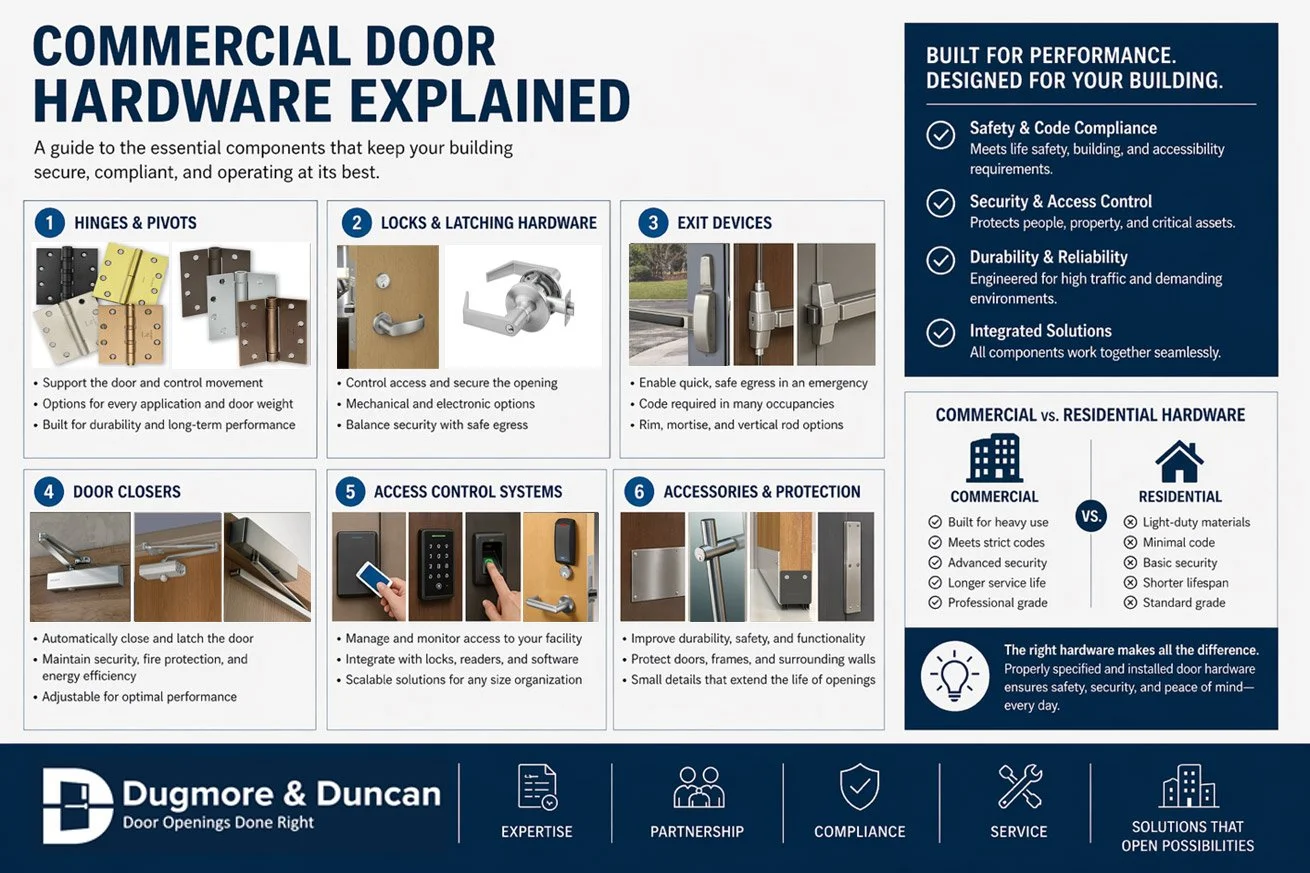
In commercial buildings, door hardware is far more than a handle and a lock. It is a coordinated system of mechanical and electronic components designed to ensure security, life safety, code compliance, and long-term performance.
Understanding commercial door hardware is essential for facility managers, contractors, architects, and business owners who want to protect people, control access, and maintain reliable building operations.
What Is Commercial Door Hardware?
Commercial door hardware refers to the specialized components installed on doors in non-residential environments such as:
Schools and universities
Hospitals and healthcare facilities
Government buildings
Office buildings and industrial facilities
Unlike residential hardware, commercial hardware is designed to withstand high traffic, stricter code requirements, and more complex security needs.
The Core Categories of Commercial Door Hardware
To fully understand how a door functions, it’s helpful to break hardware down into key categories.
1. Hinges and Pivots
Hinges and pivots are the foundation of any door opening. They control how the door moves and support its weight over time.
Common types include:
Standard butt hinges
Continuous (piano) hinges for high-traffic openings
Pivot hinges for specialty or heavy doors
Why they matter:
Improper hinge selection can lead to sagging doors, misalignment, and premature failure.
2. Locks and Latching Hardware
Locks secure the opening and control access. In commercial environments, they are often integrated with broader security systems.
Common types include:
Cylindrical locks (cost-effective, common)
Mortise locks (heavy-duty, high security)
Deadbolts and auxiliary locks
Electrified locks and strikes
Why they matter:
Locks must balance security with safe egress, especially in emergencies.
3. Exit Devices (Panic Hardware)
Exit devices allow occupants to quickly exit a building during an emergency by pushing a bar across the door.
Key features:
Designed for fast, intuitive egress
Required by code in many assembly and educational occupancies
Available in rim, mortise, and vertical rod configurations
Why they matter:
They are critical for life safety and code compliance, especially in schools and public buildings.
4. Door Closers
Door closers ensure doors automatically return to the closed and latched position after each use.
Types include:
Surface-mounted closers (most common)
Concealed closers (aesthetic applications)
Heavy-duty closers for high-traffic doors
Why they matter:
They maintain security, fire protection, and energy efficiency by ensuring doors are never left open unintentionally.
5. Access Control Systems
Modern facilities increasingly rely on electronic access control to manage who can enter specific areas.
Components include:
Card readers, keypads, or biometric scanners
Electrified locks and maglocks
Door position switches and request-to-exit sensors
Software platforms for credential management
Why they matter:
They provide flexibility, auditability, and enhanced security compared to traditional key systems.
6. Door Accessories and Protection
These components enhance durability, usability, and compliance.
Examples include:
Kick plates and armor plates
Door stops and holders
Weatherstripping and gasketing
Vision lites and louvers
Why they matter:
They extend the life of the opening and improve performance in demanding environments.
Commercial vs. Residential Hardware: What’s the Difference?
Commercial hardware is built to a higher standard than residential products.
Key differences include:
Durability: Designed for thousands of cycles per day
Compliance: Must meet strict building and fire codes
Security: Supports advanced locking and access control systems
Scalability: Used across multi-door, multi-building systems
Using residential-grade hardware in a commercial setting often leads to failures, safety risks, and code violations.
Why Proper Specification Matters
Choosing the right hardware is not just about selecting products—it’s about designing a system that works together.
Improper specification can result in:
Doors that don’t latch properly
Access control conflicts
Failed inspections
Increased maintenance costs
A properly specified system ensures:
Code compliance from day one
Consistent performance across all openings
Long-term reliability and cost savings
Partnering with a Door Hardware Expert
Commercial door hardware is complex, and every building has unique requirements.
Working with an experienced partner ensures:
Correct hardware selection for each opening
Integration with access control and security systems
Compliance with NFPA, IBC, and ADA standards
Professional installation and ongoing service
Final Thoughts
Commercial door hardware is not just a collection of parts—it’s a critical system that impacts safety, security, and daily operations.
From hinges and locks to access control and life safety systems, every component plays a role in ensuring doors perform as intended in real-world conditions.