

By Brian Lundgren | Nov. 17, 2026
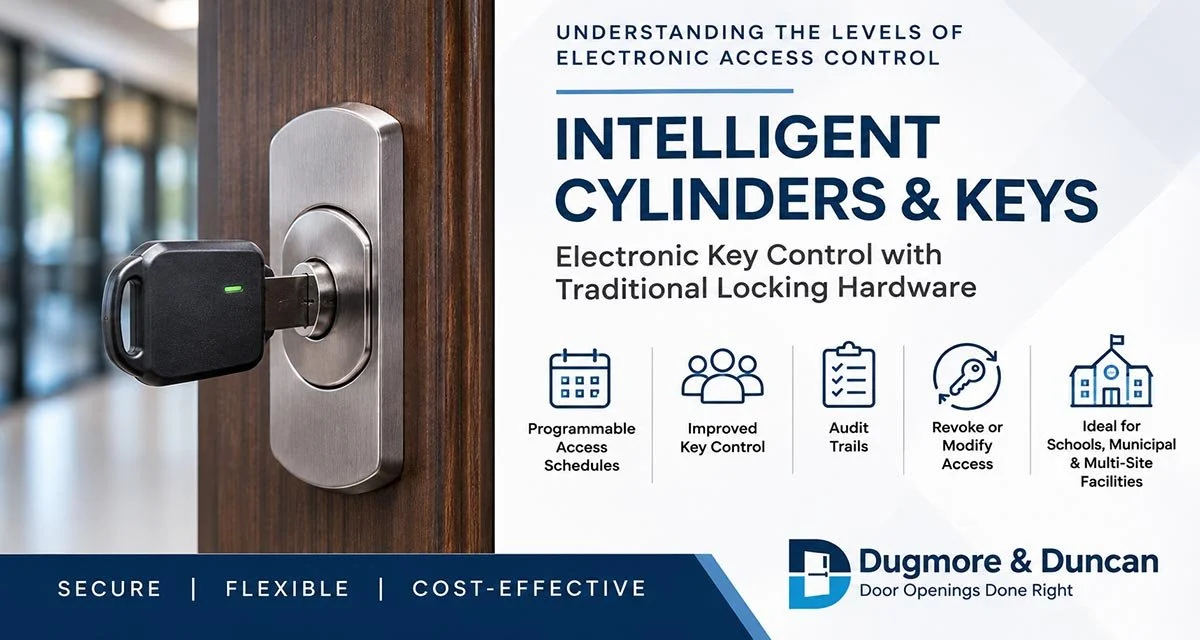
As organizations look to improve facility security, many are seeking ways to gain greater control over their mechanical key systems without the expense of installing fully networked electronic access control.
Intelligent cylinders and keys offer a practical solution by combining traditional mechanical locking hardware with electronic access management. These systems allow facility managers to control key permissions, monitor access activity, and improve accountability while maintaining the familiar operation of a mechanical key.
What Are Intelligent Cylinders and Keys?
Intelligent cylinders and keys are electromechanical locking systems that use electronic authorization to determine whether a key can operate a particular lock.
Unlike traditional mechanical keys, which rely on physical key cuts, intelligent keys contain electronic components that communicate with compatible cylinders. When a key is inserted, the system verifies its authorization before allowing the cylinder to operate.
Depending on the system, administrators can:
Assign access to specific doors or groups of openings.
Establish time-based access schedules.
Modify or revoke key permissions.
Review electronic audit trails.
Issue temporary access to employees or contractors.
Examples include Medeco XT, Medeco CLIQ, and ASSA ABLOY eCLIQ.
What Are the Advantages of Intelligent Key Systems?
One of the greatest advantages of intelligent cylinders is their ability to upgrade existing mechanical door hardware without extensive modifications.
Many systems use batteries located within the electronic key, eliminating the need for electrical wiring or power supplies at the opening. This makes intelligent cylinders particularly useful for older buildings, remote facilities, and locations where installing traditional electronic access control would be difficult or expensive.
Improved key control is another significant advantage. With traditional mechanical keys, a lost master key may require numerous cylinders to be rekeyed. Intelligent key systems allow administrators to revoke electronic permissions, reducing the potential impact of lost or stolen credentials.
Many systems also provide electronic audit trails, allowing facility managers to review access attempts and identify which credentials were used at specific openings.
Where Are Intelligent Cylinders Most Effective?
Intelligent key systems are particularly beneficial for organizations managing numerous mechanical openings across one or more facilities.
Common applications include:
K–12 schools and universities: Classrooms, maintenance areas, storage rooms, and administrative facilities.
Municipal facilities: Town halls, public works buildings, utility enclosures, and remote locations.
Healthcare facilities: Equipment rooms, storage areas, and restricted spaces.
Commercial properties: Mechanical rooms, tenant spaces, and service entrances.
For example, a school district may have hundreds of mechanical openings across multiple buildings. Rather than installing networked electronic access control at every door, intelligent cylinders can provide improved key management and accountability at selected openings while retaining much of the existing hardware.
What Are the Limitations of Intelligent Key Systems?
Although intelligent cylinders provide many electronic access control capabilities, they do have limitations.
Most systems do not continuously communicate with centralized management software. Access permissions and audit information may require updates through programming devices, communication terminals, or compatible mobile applications.
Additionally, electronic keys require battery maintenance, and organizations must continue managing the physical distribution and collection of credentials.
Importantly, revoking a key's permissions may not immediately prevent access at every opening. The timing depends on the system's communication method and configuration.
Facilities requiring real-time monitoring, immediate lockdown capabilities, or centralized door control may benefit from a networked access control system.
Is an Intelligent Key System Right for Your Facility?
Intelligent cylinders bridge the gap between traditional mechanical locks and more advanced electronic access control systems.
For organizations seeking improved key control, programmable access permissions, and audit capabilities without extensive electrical infrastructure, they offer a practical and cost-effective alternative.
At Dugmore & Duncan, we help facility managers evaluate their existing door hardware, key systems, and security requirements to determine which access control technologies best meet their operational needs.
Understanding the Levels of Electronic Access Control is an ongoing educational series exploring the technologies available to help organizations make informed facility security decisions.